Moving Fast at the Seams: How Team Handoffs Are Quietly Killing Your Shipping Velocity
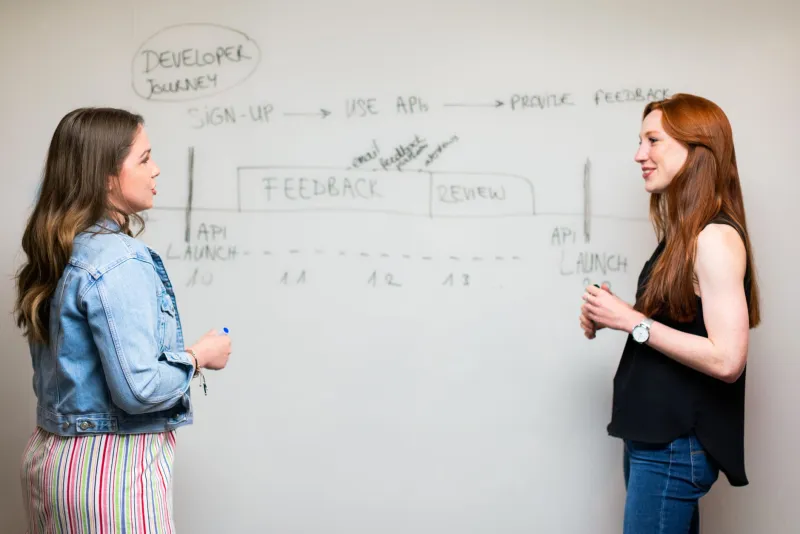
Here's a scenario that probably sounds familiar: your frontend team finishes a feature ahead of schedule. Feels great. But then it sits. The backend API isn't quite ready, the contract was loosely defined in a Slack thread three weeks ago, and now you're burning two days on alignment meetings that could've been avoided entirely.
Congratulations — you shipped fast into a wall.
This is the handoff paradox. Teams optimize locally, move quickly in their own lane, and then grind to a halt the moment they have to coordinate with someone else. The irony is brutal: the harder each team pushes to go faster, the worse the collision at the boundary.
The Illusion of Individual Team Velocity
Most engineering orgs measure speed at the team level. Story points completed. PRs merged. Cycle time per ticket. These numbers can look healthy while the actual product barely moves.
That's because the real delay isn't within teams — it's between them. Frontend waits on backend. Backend waits on infrastructure. Infrastructure waits on security sign-off. Product waits on engineering estimates. Each team, viewed in isolation, appears productive. But the end-to-end delivery clock keeps ticking.
The coordination tax — the time lost to misalignment, rework, and waiting — rarely shows up on a dashboard. It hides in Slack threads, stalled pull requests, and that uncomfortable stand-up moment when someone says, "We're blocked waiting on the other team."
Why Handoffs Fail (Even When Everyone's Trying)
The problem usually isn't attitude. Most teams genuinely want to collaborate. The problem is structural.
When a frontend engineer and a backend engineer start building toward the same feature without agreeing on the interface first, they're essentially running a race toward each other from opposite ends of a field. Fast individually. Messy at the middle.
A few patterns make this worse:
Implicit contracts. "We'll figure out the API shape when we get there" is a sentence that has cost engineering teams thousands of hours. When the contract between systems is vague, both sides make assumptions. Those assumptions diverge. And by the time anyone notices, both sides have built on top of those assumptions — making the fix expensive.
Async-by-accident. Remote work has made teams more async by default, which can be great. But when critical handoff decisions get buried in a 200-message Slack thread, they stop being decisions and start being landmines. Two months later, someone makes a change that contradicts a throwaway comment from a thread nobody remembers.
Late-stage integration. Teams that build in parallel but only integrate at the end of a cycle are essentially doing big-bang merges. The longer the divergence, the more painful the convergence. This isn't just a Git problem — it's an architecture problem, a communication problem, and a planning problem all at once.
The Patterns That Actually Work
Here's the good news: this isn't unsolvable. Teams that ship consistently fast have usually internalized a few practices that smooth out the handoff problem before it becomes a crisis.
Contract-First Development
Before a single line of feature code gets written, the teams involved agree on the interface. For APIs, that might mean writing an OpenAPI spec and committing it to the repo before any implementation begins. For frontend/backend collaboration, it could mean mocking the API response and building against that mock — so both sides can move in parallel without blocking each other.
This feels slow at first. It's not. The hour you spend defining a contract upfront saves you the two days of rework you'd otherwise spend after integration reveals the mismatch.
Async Design Reviews That Actually Land
Not every decision needs a meeting. But unreviewed decisions are dangerous. The sweet spot is structured async: a brief design doc (even just a few paragraphs and a diagram) posted to a shared channel with a 48-hour comment window before work begins.
This gives stakeholders across teams — infrastructure, security, product — a chance to raise concerns before they become bugs. It also creates a paper trail that future engineers will actually thank you for.
Staged Rollouts as Coordination Tools
Staged rollouts aren't just a risk management strategy — they're a handoff strategy. When you can ship a backend change behind a feature flag before the frontend is ready, you decouple the two teams' timelines. The backend team ships, validates, and moves on. The frontend team integrates when they're ready. No waiting, no blocking.
This requires investing in feature flag infrastructure, but that investment pays compounding dividends across every future release cycle.
Shared Definition of Ready
Before a ticket crosses team boundaries, what has to be true? This sounds basic, but most teams haven't actually written it down. A shared "definition of ready" for cross-team work — agreed upon by both teams, not handed down from a PM — dramatically reduces the ambiguity that causes handoff failures.
The Meta-Lesson: Slowing Down at the Boundary Is How You Speed Up Overall
The teams that ship the fastest aren't the ones sprinting hardest in every moment. They're the ones that slow down deliberately at the seams — spending a little more time on alignment, contracts, and shared understanding before charging ahead.
This feels counterintuitive in an industry obsessed with velocity metrics. But shipping fast into a broken integration, then spending a week debugging and re-aligning, is slower than taking an extra half-day to define the contract upfront.
At SoftLinkers, we talk a lot about connecting — developers to tools, teams to each other, ideas to execution. The handoff problem is fundamentally a connection problem. And like most connection problems, the fix isn't to push harder. It's to build a better interface.
Where to Start
If your team is stuck in handoff hell right now, here's a practical starting point: pick one upcoming cross-team feature and try contract-first design on it. Write the API spec before writing the implementation. Get both teams to review it. Commit it to the repo.
Then watch what happens to the integration phase.
Chances are it's faster, cleaner, and dramatically less stressful than your last one. That's not magic — it's just what happens when you invest in the seam instead of ignoring it.
The goal isn't to slow everyone down. It's to stop letting speed in one place create gridlock everywhere else.