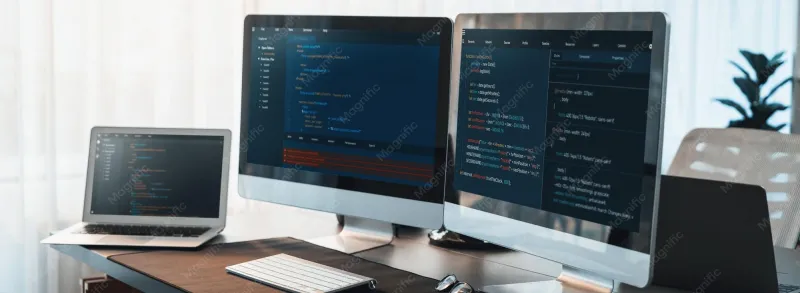
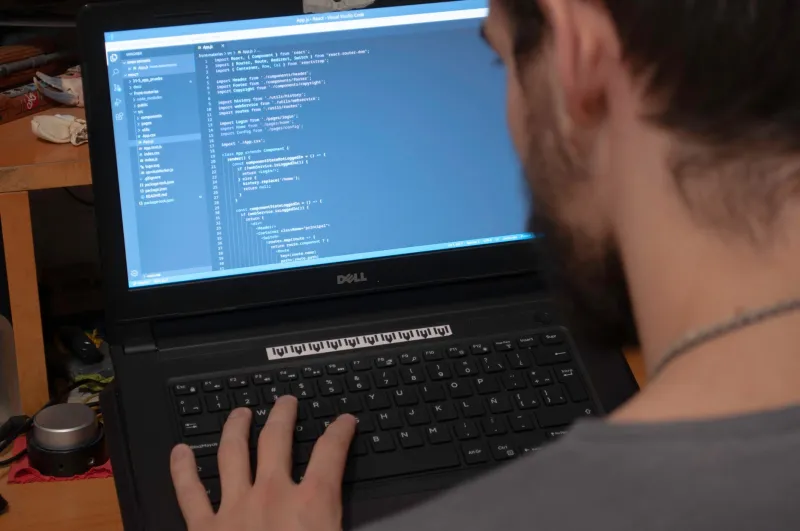
Flow State Is a Team Sport: Rethinking How We Protect Developer Focus
There's a moment every developer knows. You're finally in it — the problem is clicking, the code is flowing, you can see three steps ahead. Then your Slack pings. Or someone drops a meeting invite for 2 PM. Or a "quick question" lands in your DMs.
And just like that, it's gone.
We talk a lot in engineering culture about shipping faster. We adopt agile. We cut scope. We automate CI/CD pipelines. But we rarely have an honest conversation about the thing that's quietly torching velocity before a single line of code gets written: context switching.
What the Research Is Actually Telling Us
This isn't vibes — there's real data behind the pain. Research from UC Irvine found that it takes an average of 23 minutes and 15 seconds to fully recover your focus after an interruption. Stack a few meetings, a handful of Slack threads, and a surprise bug triage into a Tuesday, and you've effectively wiped out a full day's deep work for your engineers.
A study from Microsoft Research backs this up further, showing that developers interrupted mid-task made significantly more errors and took longer to complete their work than those who worked in protected blocks. The cognitive overhead of re-loading context — mentally re-reading where you were, what you were solving, what the constraints were — is enormous and largely invisible on any sprint board.
The cruel irony? The more senior your engineer, the more expensive these interruptions get. Senior devs carry larger mental models. Rebuilding that context costs more.
The Three Culprits Nobody Wants to Name
Notification Fatigue
Modern dev teams are drowning in ambient noise. Slack, GitHub, Jira, PagerDuty, Linear, email — each tool pings independently, and each ping is a small tax on attention. The problem isn't any single notification; it's the cumulative drip. Engineers learn to half-monitor everything, which means they're never fully present anywhere.
High-velocity teams are increasingly treating notifications like on-call rotations: somebody's watching, but it doesn't have to be everyone, all the time.
Meeting Sprawl
The average developer at a mid-sized US tech company sits in somewhere between 10 and 15 hours of meetings per week. That's not inherently catastrophic — some of it is necessary coordination. What's catastrophic is how those meetings are scheduled: scattered throughout the day in ways that shatter any chance of a sustained focus block.
A 45-minute meeting at 10 AM doesn't just cost 45 minutes. It costs the hour before it (too short to start something deep) and the 20 minutes of re-entry afterward. You've just burned two hours of prime cognitive time.
Fragmented Tooling
When your stack spans six different platforms that don't talk to each other cleanly, engineers become the integration layer. They're copying PR links into tickets, manually updating statuses, chasing down context that should be automatic. Every manual handoff is a context switch in disguise.
What High-Velocity Teams Are Doing Differently
Maker Schedules as a Team Norm
Paul Graham wrote about the "maker schedule vs. manager schedule" distinction back in 2009, and it's still one of the most underimplemented ideas in software teams. The fix isn't complicated: block mornings for deep work, afternoons for meetings and collaboration.
Teams at companies like Basecamp and Shopify have formalized this. No meetings before noon, or specific "no-meeting Wednesdays" that give engineers an uninterrupted runway. It sounds almost too simple, but the teams that enforce it consistently report measurable improvements in feature throughput.
Async-First Communication Protocols
Shifting to async-first doesn't mean going dark — it means being intentional about what actually requires synchronous time. Decisions that need discussion can happen in a Loom video or a well-structured doc thread. Status updates don't need a meeting. Code review feedback doesn't require a call.
The teams doing this well also invest in quality async communication. A detailed, well-structured Slack message that prevents three follow-up pings is worth the extra five minutes it takes to write.
Batching Interruptions by Design
Some teams are experimenting with designated "office hours" for cross-team questions — a specific window where engineers are available and responsive, and outside of which the expectation is a delayed response. This isn't about being unreachable; it's about making the interruption pattern predictable so engineers can plan their deep work around it.
Similarly, PR reviews batched into specific time windows (rather than ad-hoc throughout the day) reduce the random-interrupt problem without slowing down the review cycle overall.
Tooling Consolidation and Automation
The goal isn't fewer tools for the sake of minimalism — it's reducing the manual cognitive tax of managing tool sprawl. Investing in integrations that auto-sync state across platforms, automating status updates from CI/CD into project tracking, and consolidating notification channels into meaningful signal can meaningfully reduce the ambient noise engineers are swimming in.
The Organizational Honesty Check
Here's the uncomfortable truth: most context-switching problems aren't engineering problems. They're organizational problems wearing engineering clothes.
If your team is getting pulled into endless interruptions, it's worth asking who's generating them. Is it unclear ownership, so engineers get looped into decisions that should have a clear DRI? Is it a culture where fast responses are rewarded regardless of the cost? Is it leadership that schedules meetings without accounting for maker-schedule realities?
Protecting flow state requires buy-in above the IC level. Engineering managers have to model the behavior, enforce the norms, and push back when external demands threaten to fragment their team's focus.
Building a Culture That Ships
The teams consistently shipping great software aren't necessarily the ones with the best individual engineers. They're the ones that have figured out how to create conditions where good engineers can do their best work — uninterrupted, with clear context, and without spending half their day rebuilding mental state.
Flow isn't a personal discipline problem. It's a team design problem.
And like any system problem, it responds to intentional architecture. Audit your meeting load. Consolidate your notification streams. Create protected time that's actually protected. The velocity gains aren't theoretical — they show up in your sprint metrics within weeks.
Your engineers aren't slow. They're just being interrupted to death. Fix the environment, and watch what they build.